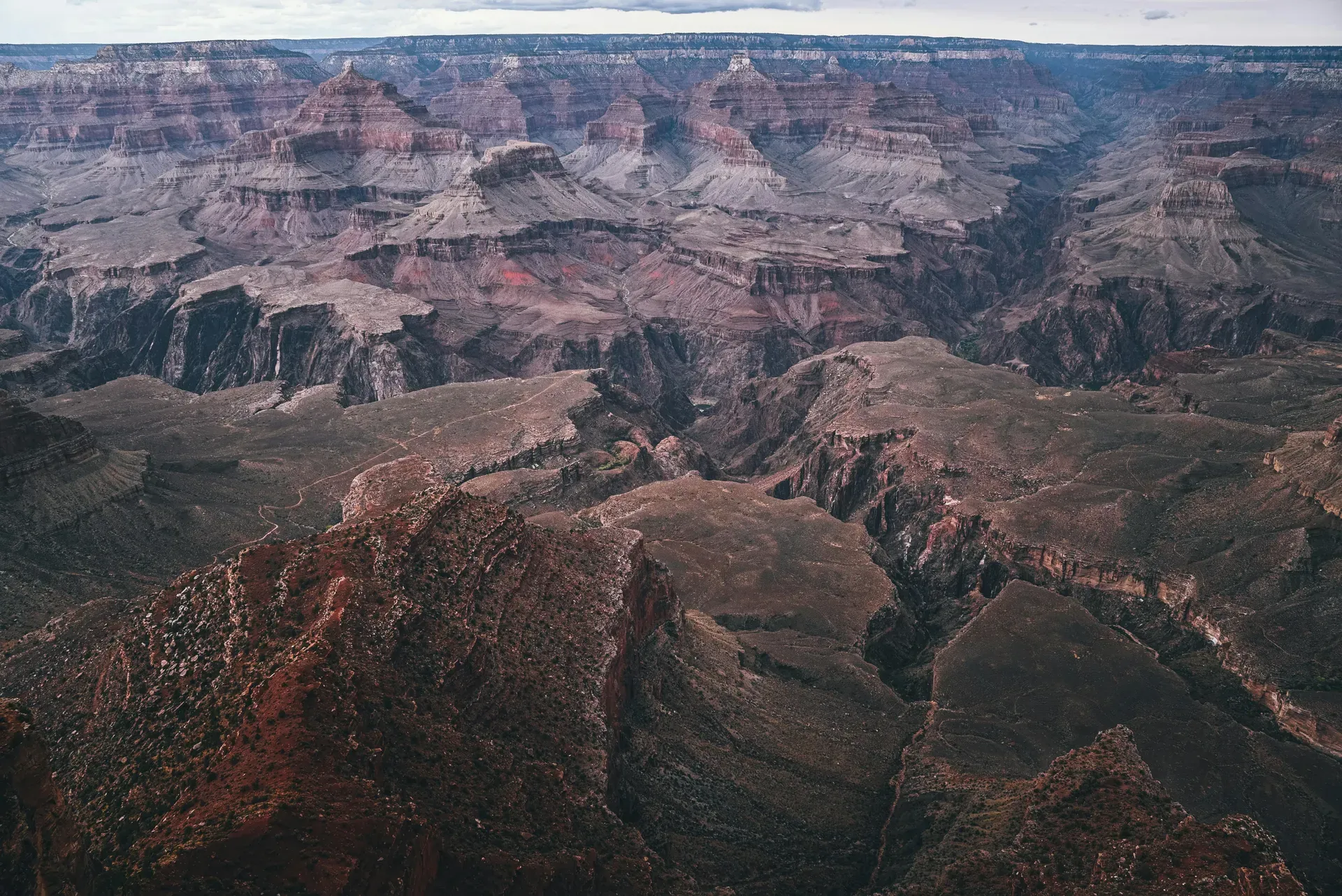
The Grand Canyon cuts through northwestern Arizona's high plateau. Visitors typically arrive at the South Rim by driving through the South Entrance Station or taking a 90-minute shuttle from Flagstaff.
Grand Canyon Village, South Rim, Arizona
The Grand Canyon Railway runs daily between the Williams depot and the Grand Canyon Historic Village. Vintage cars updated to modern standards carry passengers directly to the South Rim depot. The 63-mile ride avoids park entrance traffic and limited parking entirely.
Passengers pay the $15 individual park entrance fee along with their train ticket. Wait times for vehicles at the South Entrance Station routinely reach two hours during summer mornings. Boarding the train at Williams eliminates this bottleneck completely. The depot drops you within walking distance of the rim.
Direct shuttle and taxi companies connect Flagstaff hotels to the South Rim. Travelers arriving at Flagstaff Pulliam Airport can skip the car rental counter and board these private vans for the 80-mile northbound trip. The drive follows highway routes directly to the main visitor areas.
Distances in northern Arizona are vast, and GPS navigation sometimes directs drivers onto impassable unpaved side roads. Letting a local shuttle driver handle the navigation eliminates this risk. Fares require advance booking and drop passengers close to the rim trails.
The Trans-Canyon Shuttle runs between the South Rim and North Rim daily from mid-May to mid-October. Vans depart the South Rim at 8:00 AM and 1:30 PM for the 215-mile overland journey. Hikers completing a rim-to-rim trek rely on this service to return to their starting trailhead.
The North Rim closes entirely for the 2025 season due to the Dragon Bravo Fire, halting this route temporarily. Always confirm seasonal operational dates before booking your backcountry permits. Tickets sell out rapidly during peak hiking months.
Driving between the South Rim Village and North Rim Village requires navigating 215 miles of remote highways. The route loops around the eastern edge of the canyon, crossing the Colorado River near Lee's Ferry. Keep your gas tank full and carry extra water, as services are scarce across the high plateau.
Stop at entrance gates to purchase the $30 standard vehicle pass, valid for seven days at both rims. The park operates entirely cashless, accepting only credit or debit cards. Arrive before 9:30 AM or after 4:00 PM to bypass the longest entrance queues.
Wheelchair-accessible shuttle buses operate from the Grand Canyon Visitor Center, moving visitors along the paved South Rim. Leave your vehicle in the primary lots and board the bus via ramps built to accommodate mobility devices up to 30 by 48 inches. The system bypasses extreme parking shortages near the rim and connects major trailheads.
Roads like Hermit Road restrict public traffic, making the shuttle the primary access method unless you hold a Scenic Drive Accessibility Permit. Lines form quickly during peak summer hours, so board early in the morning.
Park at the Grand Canyon Visitor Center lot, since spaces directly on the rim are extremely limited. Parking is covered by the $30 seven-day vehicle entrance fee, and Flagstaff taxis drop passengers right at the South Rim. Drivers with mobility issues should request a Scenic Drive Accessibility Permit at the entrance gates to access restricted private roads.
| From | Mode | Time | Cost | Tip |
|---|---|---|---|---|
| Williams, Arizona | Grand Canyon Railway | 2 hours 15 minutes | Train ticket + $15 individual park entry | Vintage train cars pull directly into the South Rim depot. Passengers bypass peak season entrance station lines that often stretch up to two hours. |
| Flagstaff Pulliam Airport | Shuttle Bus | 1 hour 30 minutes | $42 - $58 each way | Direct transport drops passengers at South Rim hotels. This route removes the need to navigate vast, remote northern Arizona roads where GPS systems frequently misdirect drivers onto impassable dirt paths. |
| South Rim | Trans-Canyon Shuttle | 4 hours 30 minutes | $90 each way | Vans depart at 8:00 AM and 1:30 PM daily between mid-May and mid-October. Hikers rely on this 215-mile road loop to return to their starting point after crossing the inner canyon. |
| Las Vegas | Car | 2 hours 30 minutes | Gas + Hualapai Tribe fees | This drive leads to Grand Canyon West, which operates separately from the national park. Leave all cameras and cell phones in your vehicle, as security completely bans them on the glass-bottomed Skywalk to prevent scratching. |
| Kanab, Utah | Car | 3 hours | $30 per vehicle | This northern route accesses the North Rim's 7,500-foot cliffs. Check official park updates before departing, as the entire North Rim remains closed for the 2025 season due to the Dragon Bravo Fire. |
Arrive before 9:30 AM or after 4:00 PM to skip the two-hour wait times at the South Entrance Station. Peak season lines stall traffic far down the highway. Time your drive to hit the gates during these off-peak windows.
Grand Canyon National Park operates completely cashless. You must pay the $30 vehicle entrance fee using a credit or debit card at the gates. Attendants cannot accept paper bills.
Digital maps frequently route drivers onto impassable, unpaved side roads across northern Arizona. Stick to main highways and consult park rangers for physical maps before driving. Fill your gas tank completely and carry extra water in case your vehicle breaks down.
Leave your car at the Grand Canyon Visitor Center lot instead of hunting for extremely limited spots near the rim. Free park shuttle buses depart from this central hub to reach trailheads and viewpoints. The buses feature ramps that accommodate wheelchairs up to 30 by 48 inches.
Bypass park traffic entirely by riding the Grand Canyon Railway from the Williams depot. The 63-mile journey takes two hours and 15 minutes, dropping passengers directly at the South Rim Historic Village. Standard individual entrance fees of $15 apply on top of your train ticket.
A standard vehicle pass costs $30, while motorcycles enter for $25. You must pay with a credit or debit card because the entrance stations do not accept cash. Non-US residents 16 and older pay an additional $100 per person unless holding an Annual or America the Beautiful Pass.
The historic Grand Canyon Railway runs daily from Williams, Arizona, directly to the South Rim depot. The 63-mile trip takes two hours and 15 minutes inside restored vintage cars. Passengers pay the $15 individual park entrance fee plus the train ticket cost.
Several taxi and shuttle companies drive the 80 miles from Flagstaff hotels directly to the South Rim. The 90-minute ride costs between $42 and $58 per person each way. Travelers flying into Flagstaff Pulliam Airport frequently use this option to skip renting a car.
Driving between the rims requires navigating 215 miles of road over four and a half hours. The Trans-Canyon Shuttle typically runs this route for $90 each way, departing at 8:00 AM and 1:30 PM. The North Rim is completely closed for the 2025 season due to the Dragon Bravo Fire.
Leave your vehicle at the Grand Canyon Visitor Center lots. Parking directly near the rim fills up fast and spaces are scarce. From the visitor center, free wheelchair-accessible shuttle buses transport visitors to the viewpoints and trailheads.
Plan to arrive before 9:30 AM or after 4:00 PM to avoid heavy traffic. Peak season wait times at the entrance gates frequently reach up to two hours. Bring extra water in your car in case you get stuck in the line.
Digital navigation apps sometimes route drivers onto impassable, unpaved side roads in northern Arizona. Consult with park rangers for reliable maps before driving off main highways. Keep your gas tank full and pack emergency water in the vehicle.
Browse verified tours with free cancellation and instant confirmation.
Find Tours