Find Tours
Grand Canyon

Grand Canyon: 277 miles of exposed Earth history.

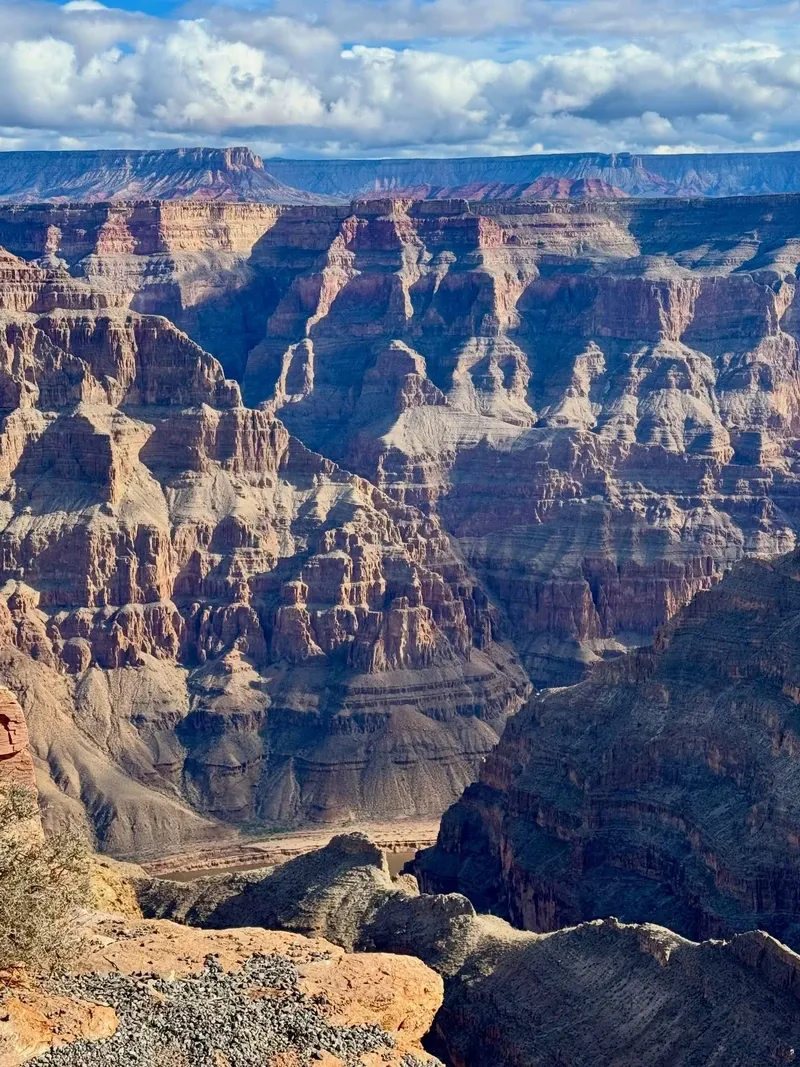
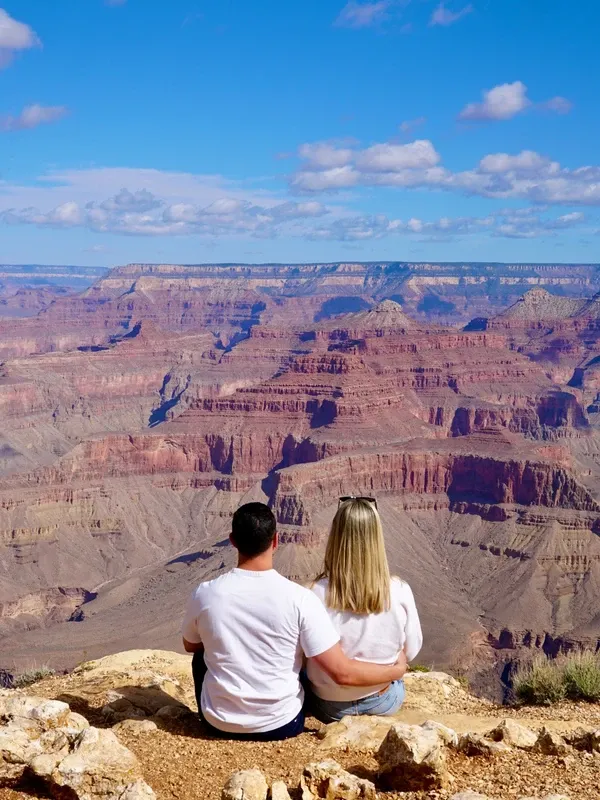
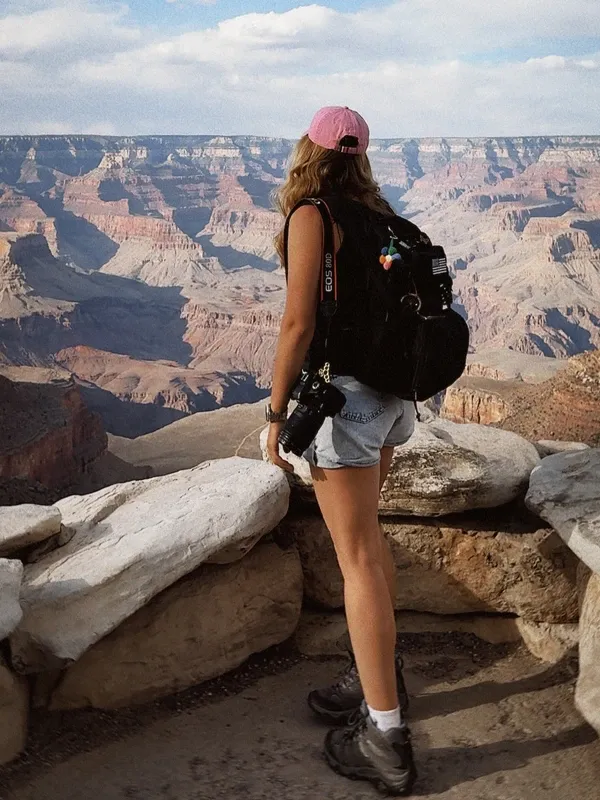
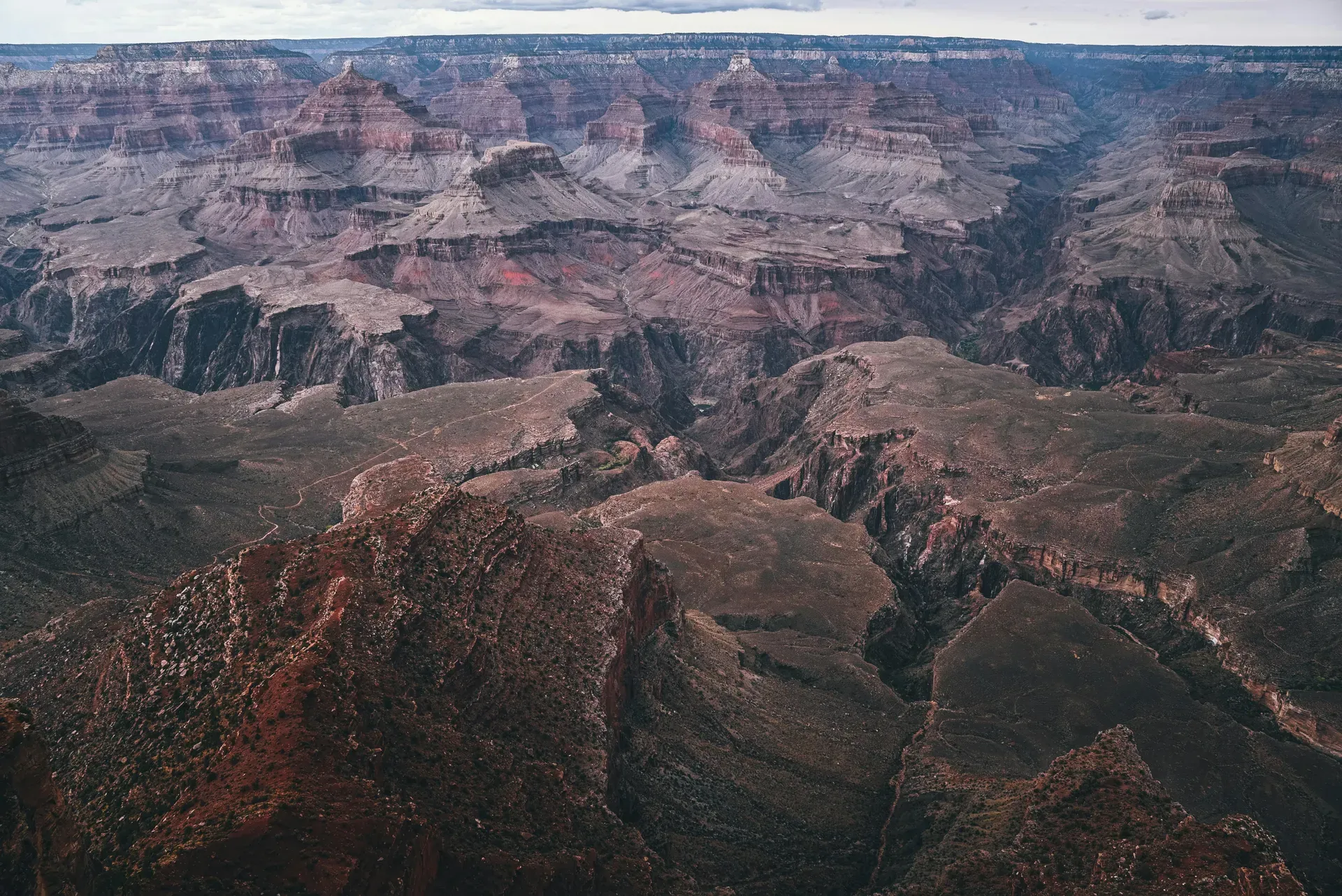
Stretching 277 miles across northwestern Arizona, the Grand Canyon exposes two billion years of geological history. You can walk the rim to view colorful stratified rock layers or hike steep switchbacks down into the mile-deep gorge.

Find Guided Tours
277 miles (445 km) Total Canyon Length
1 mile (1.6 km) Maximum Canyon Depth
Over 6 million Annual Park Visitors
2 billion years Oldest Exposed Rock

About the Grand Canyon

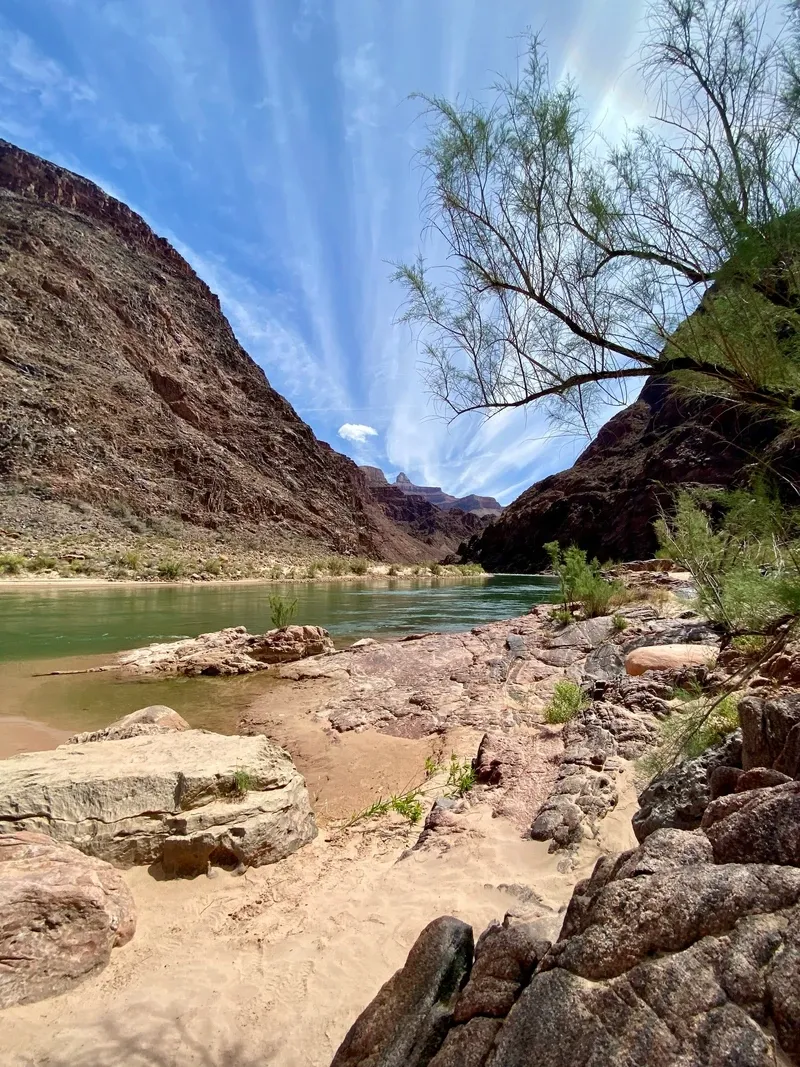
The Grand Canyon is a massive gorge carved by the Colorado River in the high plateau region of northwestern Arizona. Stretching 277 miles from Lee's Ferry to the California border, the rift measures up to 18 miles wide and plunges one mile deep. It sits within Grand Canyon National Park, which covers 1,904 square miles and draws over six million visitors annually. The landscape transitions dramatically from evergreen forests at the rims, where elevations average 7,500 feet, to stark desert environments at the canyon floor.

Recognized as a UNESCO World Heritage Site, an International Dark Sky Park, and one of the Seven Wonders of the World, the canyon acts as a globally important natural laboratory. The Colorado River cut through the uplifting Colorado Plateau to expose an exceptionally complete geological record. The rock layers reveal up to two billion years of Earth's history. At the very bottom of the inner gorge lie Archean granite and schist, which are overlaid by Proterozoic rocks dating back more than 540 million years.

Human History and Exploration

Human presence in the region dates back at least 12,000 years. Native American tribes have long inhabited the area, relying on the canyon for vital resources like water and salt. Spanish explorers first reached the rift in the 16th century. Later, in 1776, Father Escalante documented the North Rim cliffs.

Global recognition arrived in 1869 when John Wesley Powell and his team successfully navigated the rapids of the Colorado River. The United States Congress formally dedicated the area as Grand Canyon National Park in 1919 to protect its natural resources. In 1979, its global significance was cemented with its UNESCO World Heritage designation.
Why Visit Grand Canyon

Walk the Trail of Time

This fully wheelchair-accessible, 1.3-mile paved path connects Verkamp's Visitor Center with the Yavapai Geology Museum. As you walk along the South Rim, you can examine and touch physical rock samples extracted from the canyon, tracing two billion years of complex Earth history.

Hike the Bright Angel Trail

Descend directly from the South Rim into the inner canyon on this well-maintained path. Hikers navigate steep, rocky switchbacks while passing close-up geological formations. The elevation drops drastically, leading to severe temperature shifts where inner canyon heat averages over 105°F during the summer.

Visit Desert View Watchtower

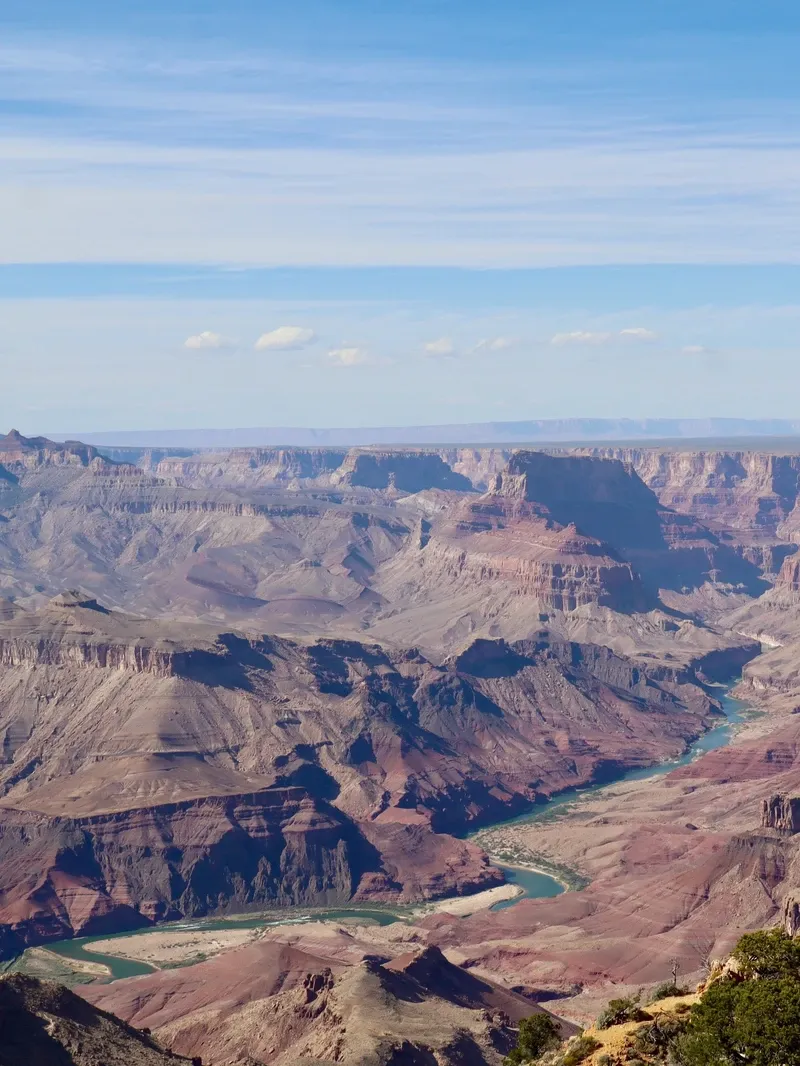
Located 23 miles east of Grand Canyon Village, this historic stone tower features unique architecture designed by Mary Colter. Visitors who explore the structure gain sweeping, panoramic views of the eastern canyon and the Colorado River cutting through the stark desert landscape below.

Ride the Historic Railway

Travel 63 miles from Williams, Arizona, directly to the South Rim depot in restored vintage train cars. This daily, two-hour and fifteen-minute ride provides a relaxed, scenic route into the park. Passengers bypass heavy entrance traffic and parking limitations entirely.

Grand Canyon Tours & Experiences

Hand-picked tours with free cancellation and verified reviews

Grand Canyon Visitor Guide

Best Time to Visit

The optimal times to visit the Grand Canyon are spring and fall, when milder temperatures create comfortable conditions for hiking. These transitional seasons allow visitors to avoid both the extreme summer heat and severe winter weather.

Spring best
March to May

Temperatures are mild and comfortable, making this an ideal season for hiking and outdoor activities. Visiting during these months allows you to avoid the extreme heat found later in the year.

Summer poor
June to August

This period brings extreme heat, with inner canyon temperatures averaging over 105°F (40°C). These conditions make hiking below the rim dangerous and uncomfortable, despite this being the peak tourist season.

Autumn best
September to November

Fall provides milder, comfortable weather perfectly suited for exploring the canyon trails. This transitional season delivers excellent conditions for outdoor activities before the severe winter weather and snow arrive.

Winter poor
December to February

Expect severe winter weather, snow, and facility closures during this time. While these colder months draw the fewest crowds, the harsh conditions significantly limit access and outdoor exploration options.

Hours & Fees

The South Rim, including Grand Canyon Village and Desert View, remains open 24 hours a day, 365 days a year. Park facilities maintain specific operating hours. The South Rim Visitor Center is open daily from 8 am to 4 pm during the summer schedule, and the Grand Canyon Conservancy Park Store operates daily from 8 am to 7 pm. The North Rim typically operates seasonally from May 15 through October 15. However, the North Rim is completely closed for the 2025 season due to the Dragon Bravo Fire.

CategoryPrice
Single Vehicle (valid 7 days)$30
Motorcycle (valid 7 days)$25
Individual (entering by foot, bicycle, shuttle, train, or rafting)$15
Children under 16Free
Non-US Residents (16 and older surcharge)$100
Grand Canyon Annual Pass$70
Interagency Annual Pass$80

Grand Canyon National Park is an entirely cashless facility. Entrance stations only accept credit or debit cards. Standard entrance passes are valid for seven days and include admission to both the South and North Rims. Non-US residents can avoid the $100 per person surcharge if they are admitted with a valid Annual or America the Beautiful Pass.

How to Get There

Visitors can access the Grand Canyon from nearby Arizona cities like Williams and Flagstaff using dedicated transit services. Available transportation ranges from historic railway routes to direct regional shuttles.

📍 Northwestern Arizona, United States

Train

The historic Grand Canyon Railway operates daily service covering 63 miles between the Williams depot and the Grand Canyon Historic Village. Passengers ride in beautifully restored vintage cars updated to modern standards. This route allows travelers to relax and view the changing landscapes. It provides a convenient alternative that avoids the hassle of park traffic and limited parking.

⏱ 2 hours 15 minutes 💰 $15 individual entrance fee (plus train ticket cost)
Shuttle Bus

Multiple shuttle and taxi companies operate direct transportation from hotels in Flagstaff to the South Rim. The route covers a driving distance of 80 miles. This service is highly convenient for visitors flying into Flagstaff Pulliam Airport who prefer not to rent a personal vehicle. It provides a straightforward transit solution directly to the national park.

⏱ 1 hour 30 minutes 💰 $42 - $58 per person each way
Rim-to-Rim Shuttle

The Trans-Canyon Shuttle runs daily from mid-May through mid-October, departing the South Rim at 8:00 AM and 1:30 PM. The drive covers 215 miles of road between the South Rim and the North Rim. This transit service is essential for hikers completing a rim-to-rim trek. It ensures reliable transport back to their original starting point across the vast canyon.

⏱ 4 hours 30 minutes 💰 $90 each way

Visitor Tips

Beat South Entrance Traffic

Lines at the South Entrance Station can stretch up to two hours during peak seasons. Plan to arrive before 9:30 AM or after 4:00 PM to minimize wait times. Bring a credit or debit card for the $30 vehicle fee. The entire park operates on a completely cashless system.

Request An Accessibility Permit

Visitors with mobility issues can obtain a Scenic Drive Accessibility Permit directly at the entrance gates. This pass allows you to drive a personal vehicle on restricted routes like Hermit Road. It provides an excellent alternative to the shuttle buses for seniors or those using canes and walkers.

Leave Drones At Home

Operating unmanned aircraft anywhere in the park airspace is strictly prohibited and will result in equipment confiscation and fines. Standard ground-based photography is permitted, provided you stay at least six feet from the rim. If visiting the Grand Canyon Skywalk, leave all cameras and phones behind to protect the glass.

Manage Inner Canyon Heat

Summer temperatures below the rim frequently exceed 105°F (40°C). Hiking during the hottest parts of the day poses a severe risk of heat stroke. Always carry abundant water along with salty snacks. The salt is necessary to replenish critical electrolytes lost through sweat in the extremely dry desert climate.

Watch For Summer Lightning

Summer monsoons frequently bring intense afternoon thunderstorms to the rim areas. Carrying metal tripods or walking near the exposed edge significantly increases your risk of a lightning strike. If you hear thunder, immediately abandon the rim and seek shelter inside a solid building or an enclosed vehicle.

Utilize Free Shuttle Buses

Parking near the canyon rim is extremely limited and fills up rapidly. Leave your vehicle at the Grand Canyon Visitor Center and navigate the South Rim using the free park shuttle system. All buses are fully wheelchair accessible and equipped with ramps to accommodate devices up to 30 by 48 inches.

Nearby Attractions

Grand Canyon West & Skywalk

2.5 hours from Las Vegas

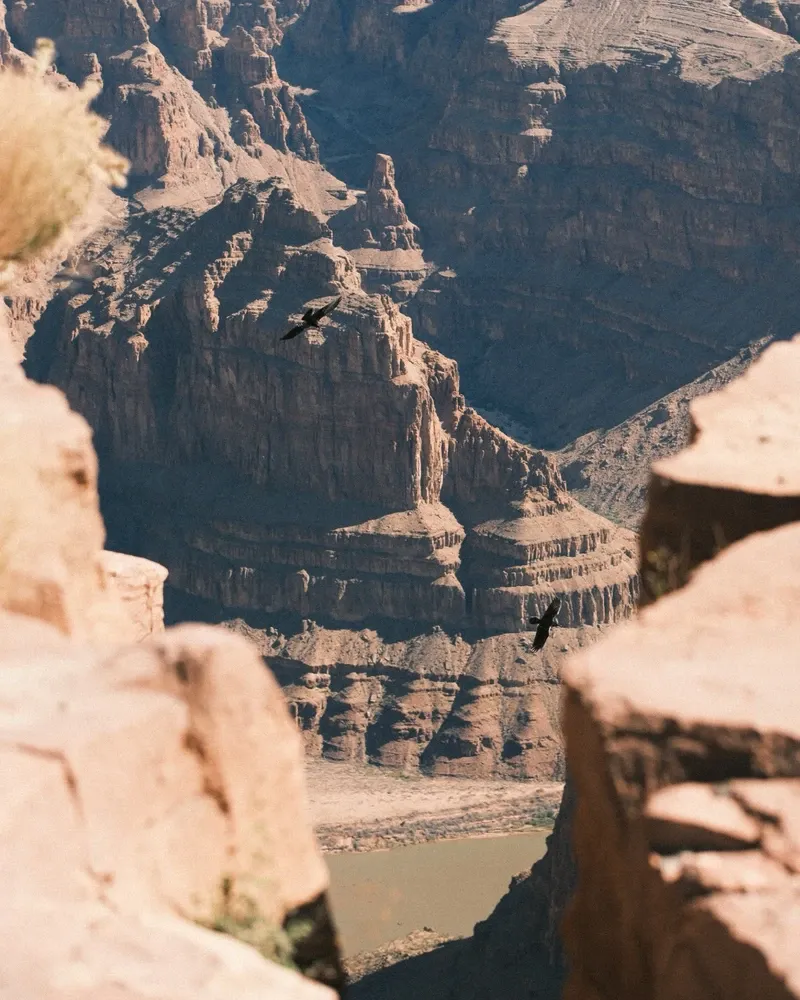
Operated by the Hualapai Tribe, this location features a glass-bottomed bridge suspended 4,000 feet above the canyon floor. Visitors walk 70 feet past the edge for a direct view down into the chasm.

Antelope Canyon & Horseshoe Bend

Approximately 2.5 hours from South Rim

This popular day tour highlights two heavily photographed landscapes in the American Southwest. Visitors explore swirling sandstone walls inside the slot canyon and view a dramatic 270-degree bend of the Colorado River.

Arches National Park

5 hours from South Rim

Located near Moab, Utah, this park contains over 2,000 natural sandstone arches, including Delicate Arch. The site features extensive hiking trails and dramatic red rock formations against the desert sky.

What Visitors Say

Read what travelers share about their experience visiting Grand Canyon — from practical tips to personal highlights.

M
Mark T. USA, Mar 2026
4.8

"We parked at the Visitor Center and took the free shuttle to avoid traffic. The kids loved the 1.3-mile Trail of Time. Touching rock samples from two billion years of geological history kept them engaged the whole walk. Definitely pack extra salty snacks for the kids."

J
Javier R. Spain, Feb 2026
4.7

"We drove 23 miles east of the village to the Desert View Watchtower. The architecture by Mary Colter is fascinating, and the panoramic views of the Colorado River are massive. I wanted to fly my drone for family photos, but they are strictly prohibited everywhere in the park."

C
Chloe M. New Zealand, Dec 2025
4.4

"I drove out to Grand Canyon West to check out the Skywalk. Looking straight down 4,000 feet through the glass floor is a crazy feeling. You absolutely cannot bring your phone or camera on the glass to prevent scratches, so I had to leave all my stuff behind."

L
Liam C. UK, Dec 2025
4.5

"Hiking the Bright Angel Trail solo was intense. The steep switchbacks give you great close-up views of the rock formations, but the inner canyon heat is no joke. Temperatures were easily over 105°F. I drank way more water than expected and stayed well back from the 6-foot edge limit."

D
David W. Australia, Nov 2025
5.0

"We took the Grand Canyon Railway from Williams. The 63-mile ride in vintage cars took about two hours and 15 minutes, skipping all the parking hassles. The $15 individual entry fee was easy to pay. Walking the paved Rim Trail with a cane was totally manageable for us."

S
Sarah H. Canada, Aug 2025
4.9

"My husband and I arrived right at 4:00 PM to skip the long entrance lines. Just a heads up, the $30 vehicle pass is card only, zero cash accepted. Watching the sunset at Hopi Point was wild. The canyon walls turned bright shades of red and gold."

Frequently Asked Questions

How much does it cost to enter Grand Canyon National Park?

The standard entrance fee is $30 per vehicle, $25 per motorcycle, or $15 per person entering by foot, bicycle, or park shuttle. These passes are valid for seven days. The park is entirely cashless, so you must pay with a credit or debit card.

What is the best time of year to visit the Grand Canyon?

Spring (March to May) and fall (September to November) are the best months for visiting and hiking. During these seasons, temperatures are milder, helping you avoid the extreme summer heat where inner canyon temperatures often exceed 105°F (40°C).

Is the Grand Canyon open every day?

The South Rim is open 24 hours a day, 365 days a year. However, the North Rim operates seasonally and is completely closed for the 2025 season due to the Dragon Bravo Fire.

How do I get to the Grand Canyon without driving?

You can take the historic Grand Canyon Railway, a 63-mile, 2-hour and 15-minute train ride from Williams, Arizona, directly to the South Rim. Alternatively, shuttle companies offer direct service from Flagstaff, taking 1 hour and 30 minutes and costing $42 to $58 per person each way.

What should I pack for a day trip to the Grand Canyon?

Bring a sturdy pair of hiking shoes, sunscreen, sunglasses, and a wide-brimmed hat to protect against intense sun exposure. You should also pack plenty of extra water and salty snacks to replenish electrolytes lost in the dry desert climate.

How wheelchair accessible is the Grand Canyon?

The South Rim is highly accessible, featuring the fully wheelchair-accessible Grand Canyon Visitor Center, Mather Point, and the 1.3-mile paved Trail of Time. All park shuttle buses have ramps and accommodate mobility devices up to 30 inches wide by 48 inches long. Visitors with mobility issues can also request a Scenic Drive Accessibility Permit at the entrance gates.

Do I need a reservation to camp inside the Grand Canyon?

Yes, you must book South Rim campgrounds well in advance, as they frequently sell out months ahead during spring, summer, and fall. If you plan to camp outside of designated campgrounds in the inner canyon, you are required to obtain a backcountry permit from the National Park Service.

Can I fly a drone at the Grand Canyon?

No, launching, landing, or operating unmanned aircraft is strictly prohibited throughout Grand Canyon National Park. Violating this federal regulation can result in citations, fines, and the confiscation of your equipment.

Ready to visit Grand Canyon?

Browse verified tours with free cancellation and instant confirmation.

Find Tours